Home Fetal Doppler: Listen to Your Baby’s Heartbeat at Home
Product Highlights
This fetal Doppler uses ultrasound Doppler technology, intelligent noise reduction, and accurate measurement. It emits no ionizing radiation and is safe for both mother and fetus when used correctly according to the instructions. It features a high-sensitivity probe that makes it easy to find the fetal heartbeat; a large digital display for clear readings; multiple modes such as instant, average, and manual; optional fetal movement recording; a low-power design with automatic shutdown after 60 seconds of inactivity; and customizable Bluetooth or Wi-Fi. It is made of RoHS-compliant eco-friendly materials and is safe and reliable.
Must Read Before Use
It is recommended to start using it after 12 weeks of pregnancy. Empty your bladder before use, and lie flat and relax. A home fetal Doppler is for daily listening and as an aid for recording. It cannot replace hospital fetal monitoring or prenatal checkups. It is recommended to use it 2–3 times per week, for no more than 10 minutes each time. If the fetal heart rate remains above 160 bpm or below 110 bpm, consult a doctor promptly.
How to Use
-
Preparation and Applying Gel
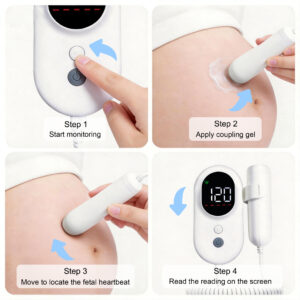
Lie flat, relax, and expose your abdomen. Apply an appropriate amount of medical ultrasound gel evenly to the probe to ensure full contact between the probe and the skin. -
Turn On the Device
Press the power button to turn it on. The screen displays “0” or “–”. -
Find the Fetal Heartbeat Position
First trimester: above the pubic symphysis; second trimester: on both sides below the navel; third trimester: adjust according to the fetal position. Place the probe gently against the abdomen, move it slowly, and adjust the angle slightly. When you hear a fast, regular heartbeat that sounds like galloping hoofbeats, you have found it. -
Read the Data
The screen displays the fetal heart rate in bpm. The normal range is usually 110–160 bpm. You can switch between instant, average, and manual modes and record fetal movements as needed. -
Cleaning and Storage
After use, turn off the power and wipe the gel off the probe with a soft cloth. Store the device in a cool, dry place, away from high temperatures, moisture, and direct sunlight.
Precautions
-
Do not use while charging to avoid safety hazards.
-
Before use, make sure the probe is securely connected to the main unit and that the battery has enough power.
-
Be gentle when finding the fetal heartbeat. Do not press hard on the abdomen.
-
If the fetal heart rate remains above 160 bpm or below 110 bpm, consult a doctor promptly.
-
The device is not waterproof. Do not soak or rinse it. Use a slightly damp soft cloth for cleaning.
-
If the device will not be used for a long time, remove the batteries to prevent leakage from damaging it.